
An Alternative Take On "Intention" In Ketamine Therapy
Using Tarot To Structure Sessions

I’ve been doing ketamine therapy this past month as part of my long-running effort to find a satisfactory relationship with seasonal affective disorder. Probably I’ll do a much more comprehensive write up once I’m done with ketamine for the year, but I feel like sharing this part on its own.
People generally recommend going into a ketamine experience (and other heavily consciousness-altering experiences) with some kind of intention. My prescribing clinician says the words “intention” and “integration” quite a lot, for example. But I’ve found that any verbally articulated intention is too rigid for me.
A clear intention inclines me to try to control things, even if my intention is something like “let go”. I end up self-monitoring and self-coaching: “Am I letting go? Remember to let go. My goal is to be letting go right now. Oh no, I don’t think I’m letting go, I need to fix that!” Which is of course the opposite of letting go. The medicine doesn’t like this.
Here’s what works amazingly well for me: Instead of an “intention” in the most obvious sense, I use tarot cards.
I don’t “do a reading”, and I don’t even choose a card at random. What I do is look through about a dozen cards, pick out two to five that feel especially interesting or good to me at the moment, and just look at them for a bit as I’m going into the session.
During the session, one of them asserts itself as the focus. I don’t consciously decide which one ahead of time. I just find out.
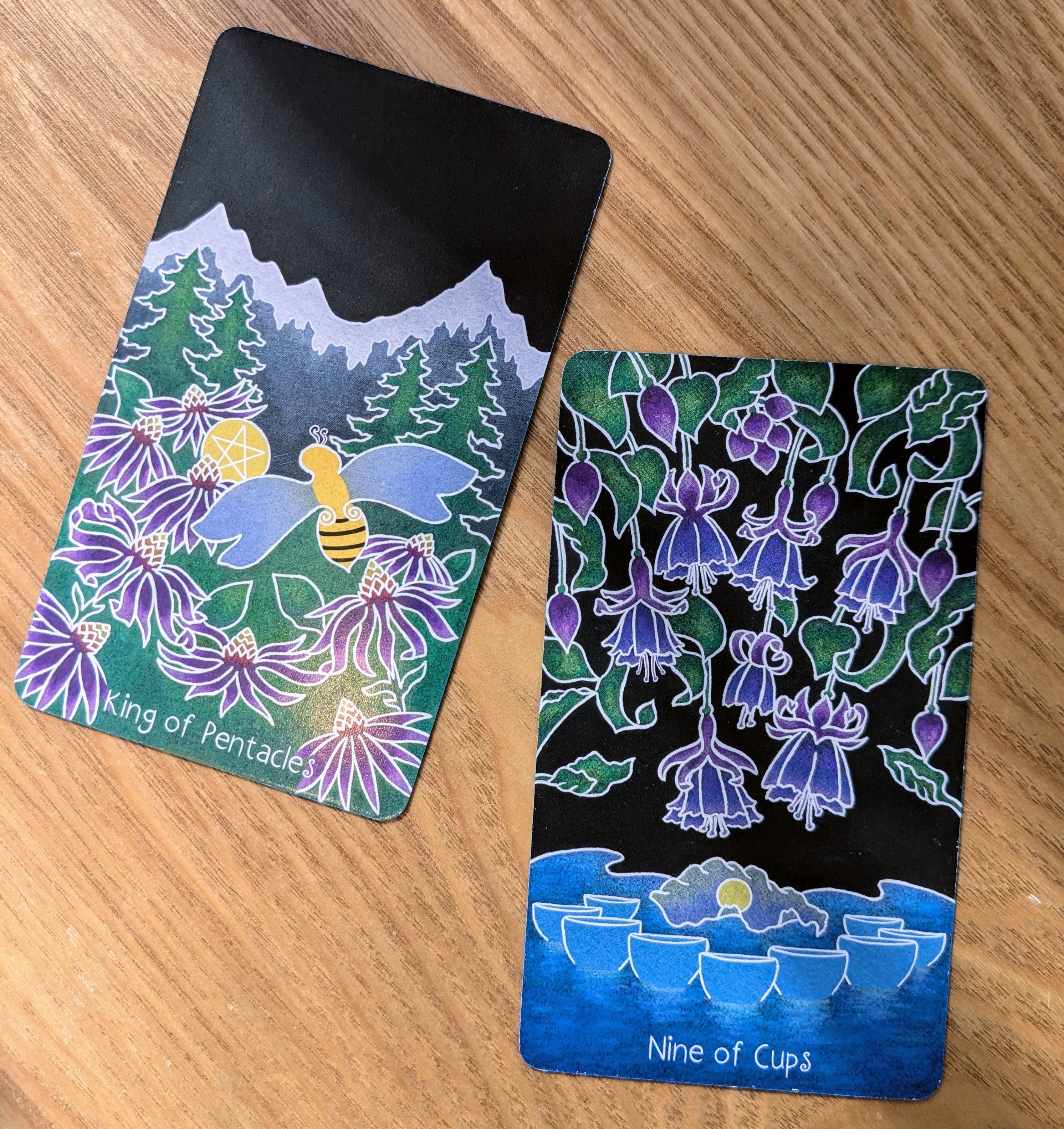
Once, it was the Nine Of Cups. The experience centered on my openness to enjoying the pleasant things already available in my life. In the following days, I made a little altar with nine cups, and each cup contained a note on which I’d written an available pleasure. “Make fancy s’mores.” “Light a scented candle and paint with music playing.” “Dress up in a delightful outfit.” Then I set out to take each of these opportunities in turn.
The next time, it was the King Of Pentacles. The experience centered on stepping into my new role as an instructor in my local swing dance community. I made a shift from someone on the outskirts who mostly receives value from the community-building efforts of others, to a recognition of myself as someone with an abundance of resources, gained through experience, that it’s now time for me to share as a foundation of the club.
Afterward, I modified my lesson plans to take my hopes for the club’s culture into account, as though I have not only a right but a responsibility to act on these hopes, given the way others are looking to me for guidance. I also began planning future programs and workshops that could help members bring more authenticity, improvisation, rhythm, and community spirit to their dance.
At first, I worried this method was giving me sort of random outcomes. I worried that these experiences, and the actions I felt compelled to take afterward, had little to do with depression treatment and more to do with which card I happened to look at or what I happened to be thinking about that day.
But I mean, come on: First I regained the ability to enjoy things, then I tapped into a source of meaning and purpose in my life that also enriches my social bonds. None of the dozens of interventions I have ever tried, including light therapy and exercise and conventional antidepressants, has accomplished anything so dramatic. 10/10 on the depression treatment front, yeah? At the very least, the tarot cards are not getting in the way.